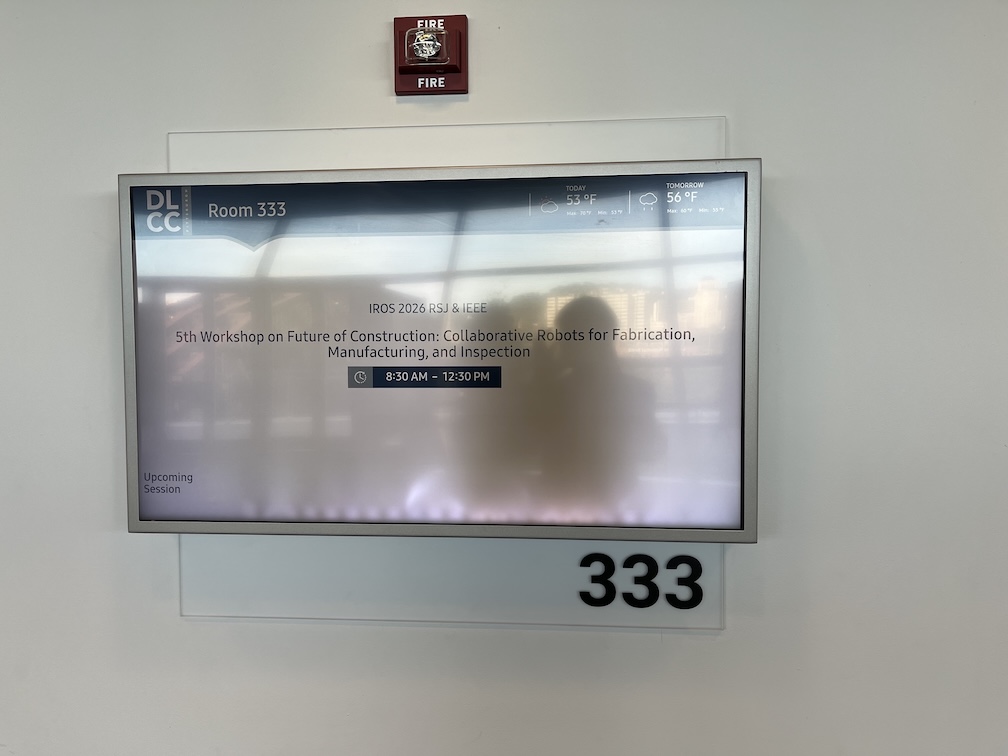
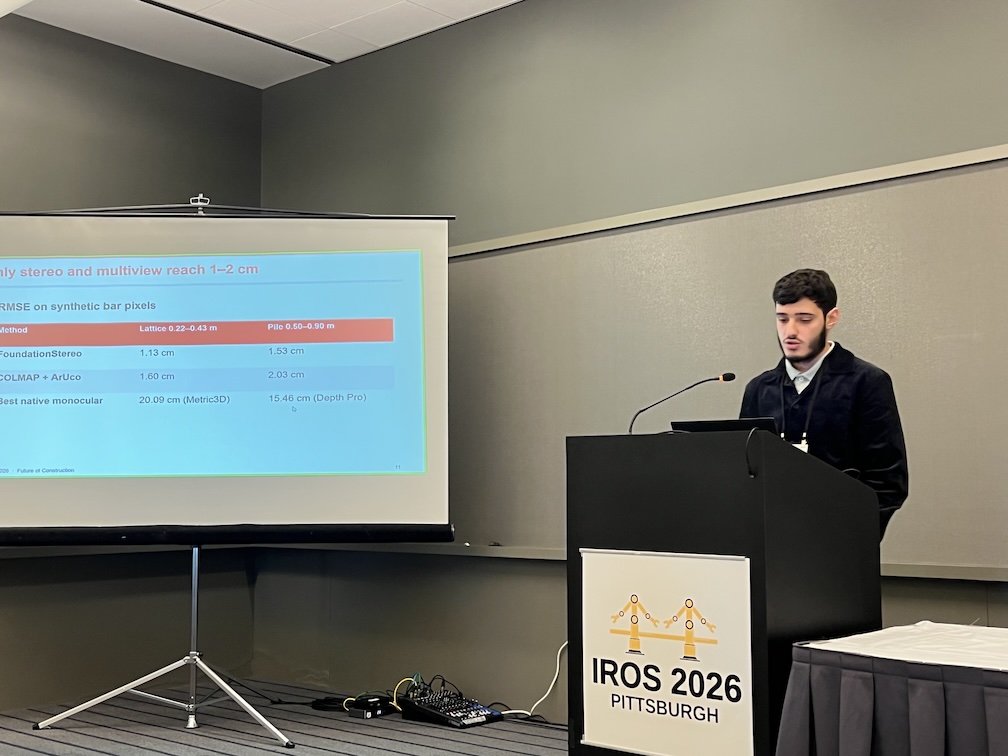
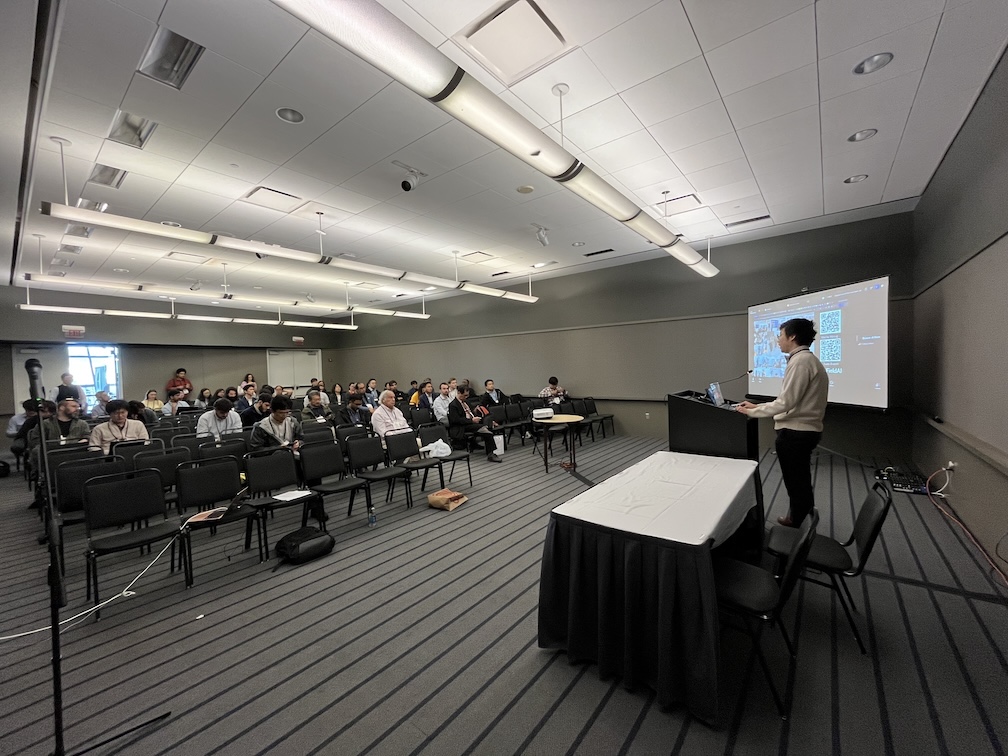
The $10 trillion global construction industry has traditionally been a labor-intensive industry, yet it stands to benefit from autonomous robots that promise to deliver construction work that is more accurate and efficient compared to manual or conventional methods. However, the integration of automation and robotic technology into the construction workplace is faced with significant barriers including high cost of entry, safety concerns, inadequate training and knowledge about robotics, and poor performance of robots in dynamic, cluttered and unpredictable environments such as construction sites.
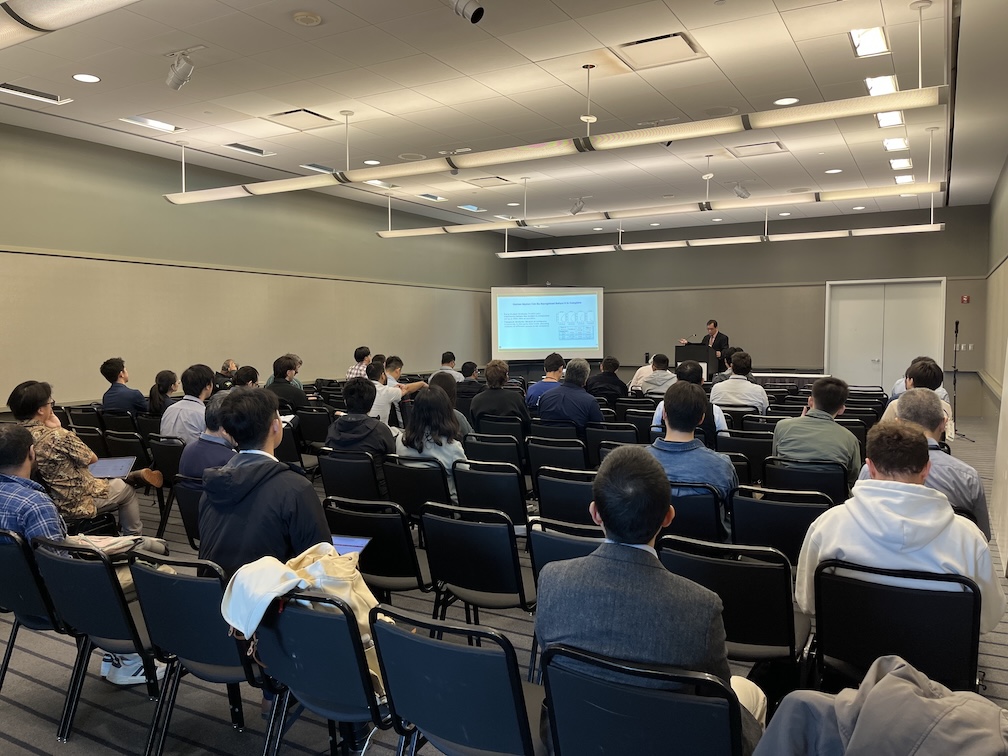
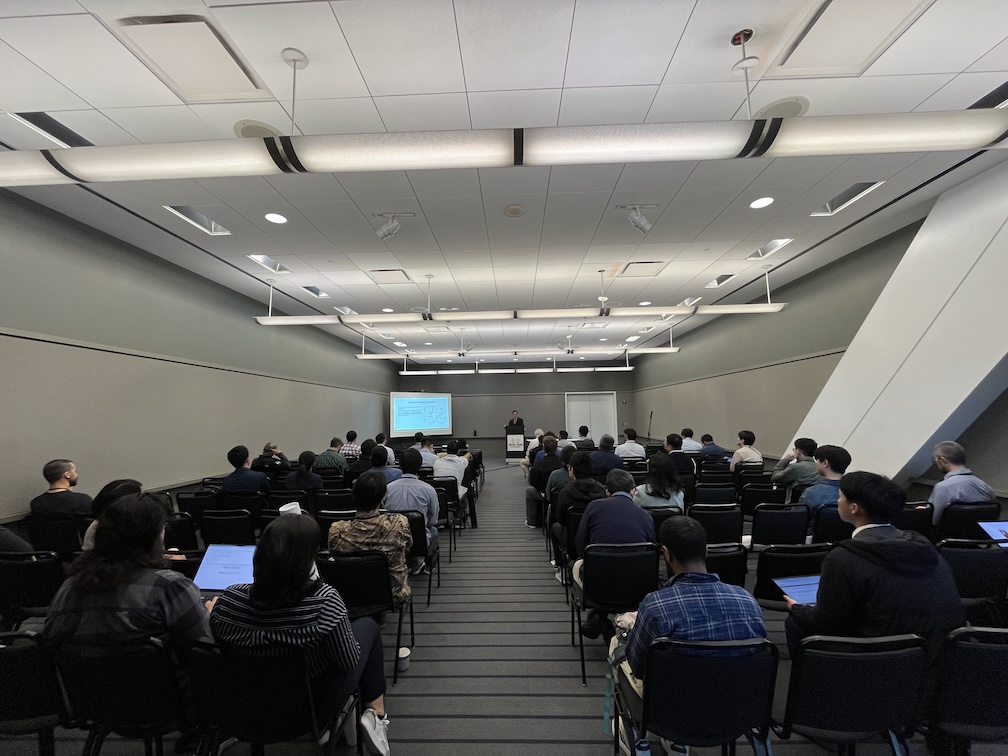
To tackle these challenging issues, this workshop aims to facilitate discussion on technology that will enable advanced robotics for future construction workplaces with an emphasis on robust perception and navigation methods, learning-based task and motion planning, and safety-focused robot-worker interactions. This workshop will provide a venue for academics and industry practitioners to create a vision for robotics in construction work and ensure equitable participation in planning for the future of construction workplaces. The half-day workshop will feature presentations by distinguished speakers from both industry and academia as well as interactive activities in the form of lightning talks, poster sessions, and panel discussions
(Virtual attendees) Join us using the following Zoom link:
https://us05web.zoom.us/j/82213560347?pwd=A5czwYKHPF7mAuVInFET6hxvdMoDJK.1This workshop will solicit contributions in two tracks: (i) the Paper Track and (ii) the Poster-only Track.
Paper Track: This track consists of contributed papers that constitute novel, original research in construction robotics or closely related fields. Contributed papers cannot take the form of an existing paper that is published or under review. Contributed papers should be in the form of extended abstracts (about 3-4 pages in IEEE conference paper format, including references). Optionally, authors may submit a link to a 2-3 minute video presentation of their paper if their work involves visualization, robot operation etc. The accepted contributed papers will be made publicly available on the workshop website. Authors of selected papers will be invited to extend their work into a journal paper for an upcoming Special Collection at the Journal for Computing in Civil Engineering.
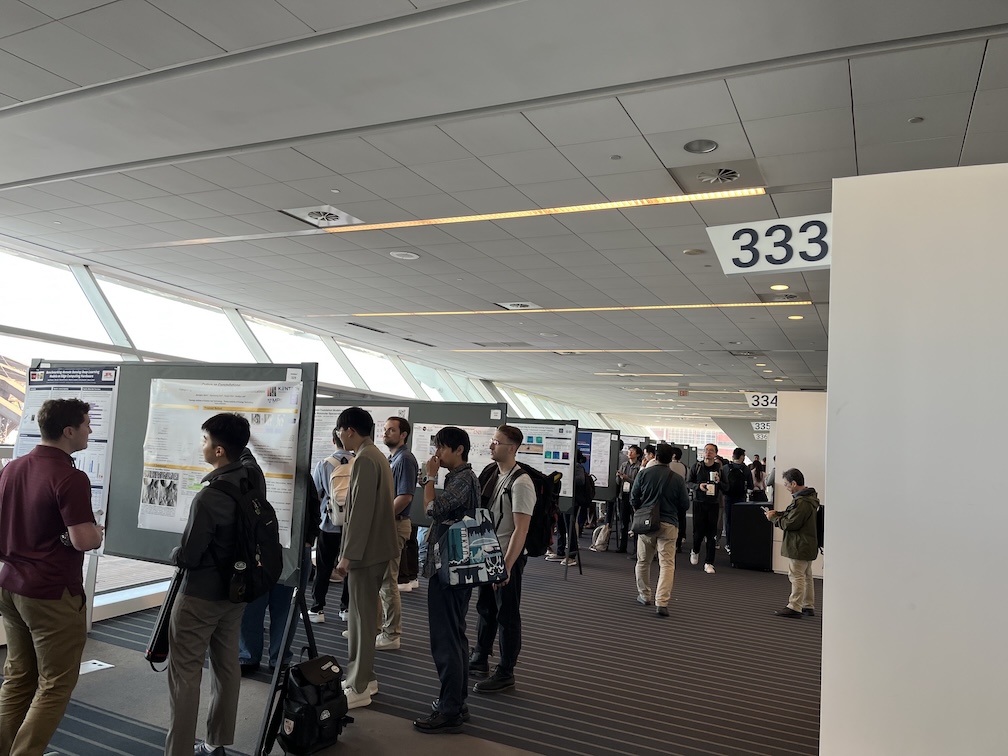
Poster-only Track: This track consists of posters that can be either based on a prior publication or novel work. Authors with an original paper may submit it to both tracks (paper and poster). Accepted posters will be presented during the poster session on the day of the workshop in the hallway outside the conference room. Authors are expected to print out and bring their own posters to the workshop, though poster boards will be provided. There is no specific template for the posters. You should choose the format that best represents your research work.
Submissions can be made through OpenReview, where the paper or poster can be uploaded in PDF format. In the OpenReview submission form, please specify which track you are submitting to and provide a video URL (if applicable). Deadlines given below are in Anywhere on Earth Time. Questions regarding the paper submission should be directed to chenjingdao@cse.msstate.edu.
Camera-ready paper submissions should also be made through OpenReview.
If you require an early decision notification due to having to apply for a visa, please contact chenjingdao@cse.msstate.edu
The topics of interest include, but are not limited to, the following:
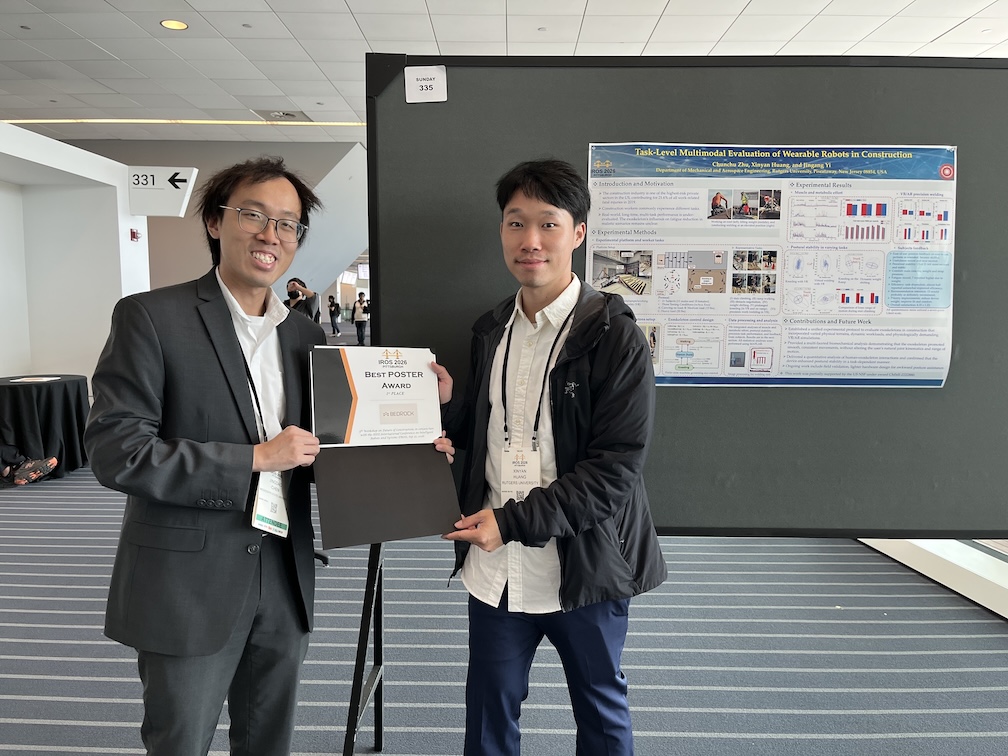
Submitted posters will be considered for Best Poster Awards, and in-person judging will take place on the day of the workshop. Best poster awards come with $500 in total cash prizes generously sponsored by Raise Robotics and Bedrock Robotics (First place: $300, Second place $200).
Poster #1: Toward Task-Level Multimodal Evaluation of Wearable Robots in Construction Worker Activities
Xinyan Huang, Jingang Yi
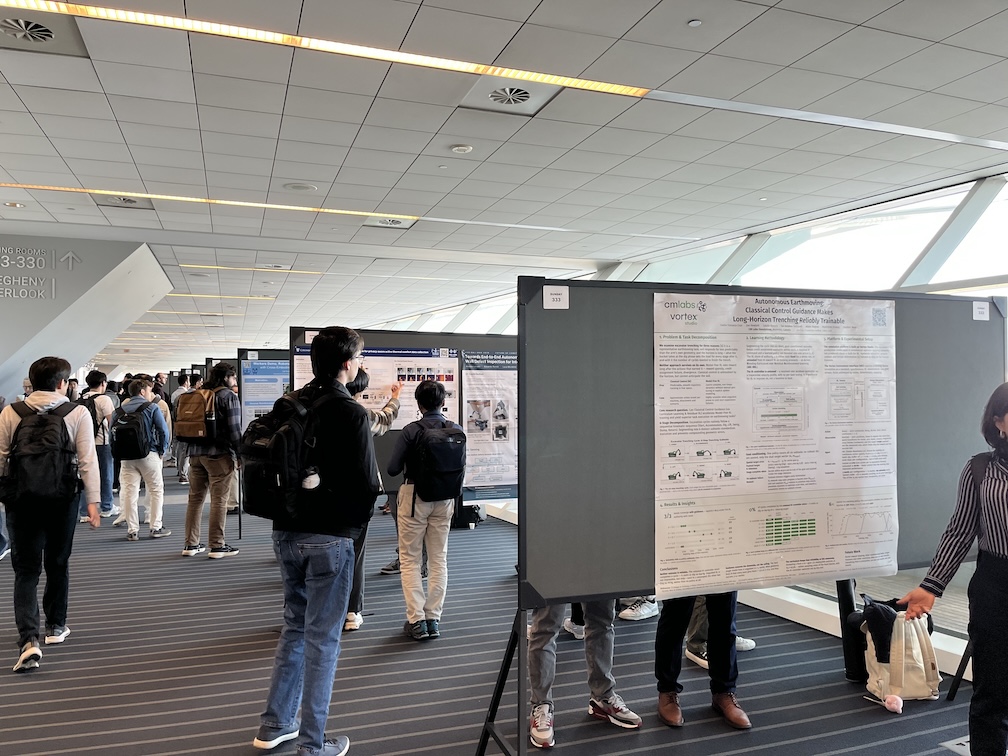
Poster #2: Autonomous Earthmoving: Classical Control Guidance Makes Long-Horizon Trenching Reliably Trainable
Joseph Hewlett, Clodéric Mars, Evelin Fonseca Cruz, SaiKrishna Gottipati, Laszlo Kovacs, Adam Bognat, ManhTriet Hoang
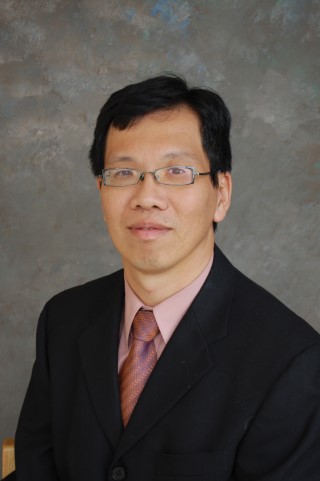
Marvin Cheng is a research engineer in the Center for Occupational Robotics Research at NIOSH. He is currently the Assistant Coordinator of the Center for the Occupational Robotics Research (CORR), and the Team Lead of the Safety Control Team at the National Institute for Occupational Safety and Health. His research interests include operation safety of robots in workspaces, human-robot interaction, control system, and cyberphysical systems used for human-robot collaboration.

Robert Stuart-Smith is an Associate Professor of Architecture, Director of the Digital Building Lab, and Steward of the Chuck Eastman Doctoral Fellowship Fund in Georgia Tech's School of Architecture, College of Design. Stuart-Smith also leads the Autonomous Manufacturing Lab across Georgia Tech and the University College London's Department of Computer Science, directing over $5.8 million in competitively funded research and collaborating with industry partners including Cemex, Skanska, Mace, Buro Happold, Arup, and the Manufacturing Technology Centre.
Stuart-Smith’s research sits at the intersection of AI/multi-agent approaches to robotic manufacturing, collective robotic construction and building design-engineering. His multidisciplinary work on Aerial Additive Manufacturing, published in Nature, demonstrated the world’s first in-flight additive manufacturing by cooperating drones. Across this body of work, he integrates robotic manufacturing with architectural design to address the environmental and economic costs of construction while expanding its cultural and aesthetic potential.
Prior to joining Georgia Tech, Stuart-Smith was faculty in the University of Pennsylvania's department of Architecture and Affiliate Faculty in the School of Engineering's GRASP Laboratory. At Penn, Stuart-Smith established an advanced robotic fabrication facility and was founding director of the Master of Science in Design: Robotics & Autonomous Systems (MSD-RAS), an interdisciplinary post-professional degree integrating artificial intelligence, robotic fabrication, and architecture. He has also taught at the AA School of Architecture in London, and sessionally at several institutions internationally. Stuart-Smith work is published in venues including Nature, Science Robotics, and AD Architectural Design, and exhibited internationally, including at the Venice, Tallinn, Beijing, and Prague Architecture Biennales, and also featured by BBC Click, New Scientist, Smithsonian, and Architizer.

Dr. Olga Vysotska is a postdoc in Computer Vision and Geometry Lab (CVG) and Robotic Systems Lab (RSL) labs with Dr. Marco Hutter at ETH Zurich. She received her Ph.D. from the University of Bonn at the lab of Photogrammetry and Robotics led by Prof. Cyrill Stachniss. She is a Design++ Fellow and focuses on robot and augmented reality device localization in construction environments. Olga has authored papers on SLAM with publicly available maps, spatio-temporal mapping, and visual place recognition in changing environments.

Bruce Alton is co-founder and CEO of RoBIM Technologies Inc. which is building a Physical AI-driven platform for robotic prefabrication of components used in residential, commercial and industrial construction projects. RoBIM integrates simulation software, proprietary robotic fabrication capabilities and modular components to create configurable fabrication solutions for its customers in the prefabrication and modular building industry.
After several years of development by a leading team of construction automation experts and with five patents granted to date, RoBIM is launching its HIVE robotic fabrication platforms for North American, Asian and European markets.
Bruce is also co-founder and partner at A-Partners Ventures Inc. which is an advisor to, co-founder of and investor in growth-oriented businesses. At A-Partners, Bruce built a portfolio of equity stakes in early-stage growth companies with an investment thesis of utilizing artificial intelligence and machine learning to solve Alberta’s business problems such as in construction, engineering and energy.
Over his thirty-five-year career, Bruce has been a company founder, senior operating executive and investor and his roles have spanned real estate development, software services, advanced manufacturing and venture capital. He also serves as a corporate board director and has been an invited speaker at entrepreneurship and technology conferences around the world.
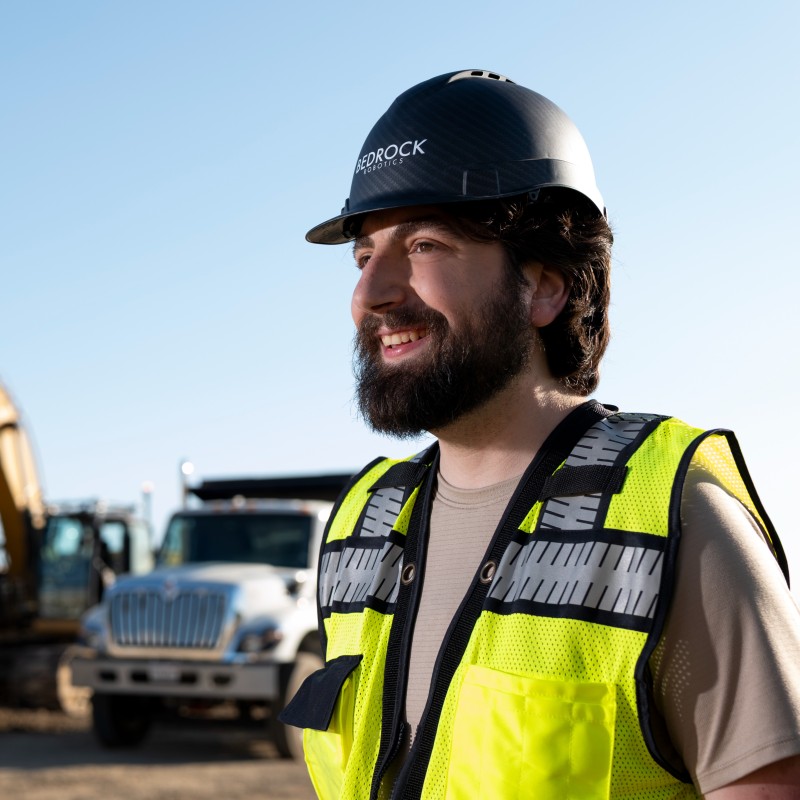
Deploying end-to-end policies on real world construction sites: Bedrock Robotics is a robotics company automating the future of construction. During this talk, we will discuss Bedrock's mission, how far we've come in the last year, and the challenges of deploying real end-to-end mobile-manipulation policies on real-world construction sites. We'll explore issues related to emergent behaviors, handling the safety, and even some novel human-robot interaction problems we encountered! Finally, we'll discuss our current deployments and outline what's next for the future of autonomous construction.

Raise Robotics develops an automation platform to fits the demands and challenges of industrial environments. In this talk, Kenrick will share a perspective that doesn't always make it into the research room: "the wild" as an active construction site, where the staging area shifts daily and the building goes up floor by floor. The talk will focus on the gap between what a robot is validated to do and what the field actually throws at it, and how that loop can be closed with every deployment.

BDR is redefining how building inspections are done - turning manual, disruptive, and inconsistent processes into fast, digital, and actionable intelligence. We deliver autonomous roof inspections that help owners, contractors, and partners make smarter, safer decisions - all within 48 hours. Our platform transforms raw scan data into defensible, visual reports that empower better planning, faster repairs, and future-ready portfolios.

FieldAI introduces Field Foundation Models(FFMs), a new class of risk-aware robotics AI built around a Belief World Model (BWM). The BWM serves as the predictive engine that reasons under uncertainty, enabling robots to operate reliably in real-world environments even in the presence of unexpected events.
This workshop is made possible thanks to the generous sponsorship of the following organizations:



Links to previous iterations of this workshop at past conferences: